Cole Comm 111
Persuasive Speech Research
3 Research Steps to Successful Research When a Thesis Is Needed
Explore a topic, learn enough to understand the conversation surrounding it, and develop a focused question before searching for evidence for your persuasive speech.
Begin with Three Research Steps
Key Question
How do you move from a broad topic to a question that can support a persuasive thesis?
- Explore and pick a topic.
- Learn the basics of your topic: Who, what, when, where, and why. You should be able to talk for a minute, without repeating yourself, on your possible topic.
- Find an interesting question. It should not be too easy, too fuzzy, have too many parts, or be impossible to answer. It should require analysis and thought and should be debatable.
Why Learn About the Topic First?
When you participate in research or scholarship, you are entering into an ongoing conversation; you have to listen or read about that conversation before finding an interesting, relevant question. Many try to skip this step and end up frustrated. You wouldn't want to go up to two strangers on the street and join their conversation before you knew what they were talking about.
Bottom Line
Do not rush from choosing a topic directly into collecting evidence. Learn enough about the topic to identify a meaningful, debatable question first.
Develop a Research Question
Use the video below for additional guidance as you move from a general topic toward a research question.
Explore and Understand Your Topic
Key Question
What do you need to know before deciding exactly what you want to argue?
Start broadly. Explore the people, events, issues, perspectives, and terminology connected with your topic. This background research can help you discover a question worth investigating.
For additional guidance on AI-assisted exploration, see AI Tools for Research and Writing Success.
Brainstorm with Perplexity
Use Perplexity to generate possible directions for your persuasive speech.
Sample Prompt
I am interested in [your topic], and would like potential ideas for a persuasive speech. My goal is to change the minds or behavior of my audience in 5–7 minutes.
Use Exploration to Learn, Not Just to Choose
Explore several perspectives and background sources before settling on your question. The goal is to understand the conversation well enough to recognize an interesting issue you can investigate.
Resources for Exploring an Issue
Search Government Sources
For current information on the state of a particular issue or bill, try searching within the government domain online.
Practice Search
[your search term] site:.gov
Data use: Statistical data can provide tremendous support for your persuasive speech.
- Search congressional bills on Congress.gov.
- Explore the U.S. Data and Statistics resources, then review a government data source related to your topic.
Search for Evidence
Key Question
What evidence and perspectives will help you investigate your tentative question?
Before you begin: Search for journal, magazine, and newspaper articles only after you have a tentative question and keywords.
Google Scholar
Google Scholar is a freely accessible search engine that indexes scholarly articles, theses, books, conference papers, and patents across various disciplines. It allows users to easily find academic literature, track citations, and access research materials, making it a valuable tool for students, researchers, and educators.
Academic Search Complete
Academic Search Complete contains more than 7,300 peer-reviewed journals. In addition to full text, this database offers indexing and abstracts for more than 12,500 journals and a total of more than 13,200 publications including monographs, reports, conference proceedings, etc.
LexisNexis Academic
Academic Universe provides access to nearly 5,000 publications on a wide range of topics: news, business, legal, and reference information. In Business, it includes company financials, SEC Filings and reports, directories, accounting journals & more.
Ethnic NewsWatch
Ethnic NewsWatch is a full-text collection of newspapers, magazines and journals of the ethnic, minority and native press. A rich collection of articles, editorials, columns, and reviews provide a broad diversity of perspectives and viewpoints -- the other sides of the stories. This resource is searchable in both English and Spanish.
Choose a Database for Your Subject
- Environment Complete — Use for environmental topics.
- SocIndex with Full Text — Use for topics concerning social topics or society.
- Political Science Complete — Use for political topics.
- SportDiscus — Use for topics related to sports and athletics.
Bottom Line
Choose your search tool based on the kind of evidence your question requires. A focused question and useful keywords will make database searching much more productive.
Cite Your Sources
Key Question
How will you give appropriate credit to the sources that support your speech?
Purdue Online Writing Lab (OWL)
Great information on citing a variety of sources in APA, MLA, and Chicago styles. This site also includes a lot of good information on the writing and research process.
Citing References in Your Paper
Great site from the UW Madison Writing Center.
Find Images for Your Presentation
The following resources can help you locate public domain or copyright-friendly images for a presentation. Review the usage information associated with an individual image before using it.
Pixabay
Pixabay is a vibrant community of creatives, sharing copyright free images and videos. All contents are released under Creative Commons CC0, which makes them safe to use without asking for permission or giving credit to the artist - even for commercial purposes.
Google Images
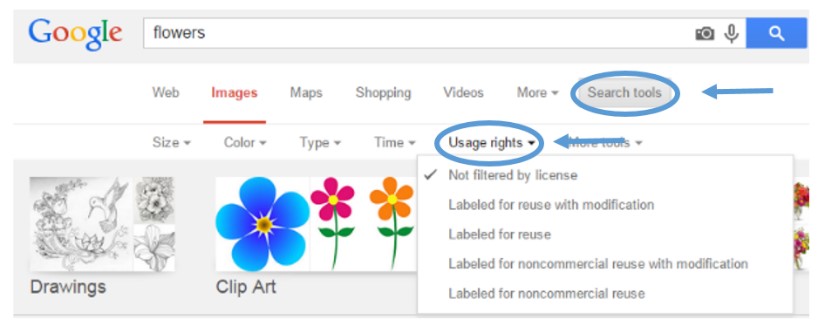
In Google Images you can search for a word or phrase. When the results are displayed, you can then choose to limit the results by usage rights. First, click on Search Tools, then on the dropped down titled, Usage rights. See screenshot below.
What to Notice
The screenshot illustrates where to look for controls that limit image results by usage rights. Use the written instructions above as your primary guide because search interfaces can change.
Unsplash
"All photos published on Unsplash are licensed under Creative Commons Zero which means you can copy, modify, distribute and use the photos for free, including commercial purposes, without asking permission from or providing attribution to the photographer or Unsplash."
Wikimedia Commons
"Wikimedia Commons is a media file repository making available public domain and freely-licensed educational media content (images, sound and video clips) to everyone, in their own language." --Be sure to check out their quality images.
Morguefile
"Looking for high resolution stock photos for your illustration, comp or design needs? Search morgueFile for free reference images. Yes, they're all completely free. whether you're an illustrator, art director, instructor or looking to add a defining visual to a presentation."
Looking Ahead
Turn Your Question Into a Persuasive Thesis
You have moved from exploring a topic to developing a question, locating evidence, and identifying resources for citing sources and finding presentation images. Use what you discover during research to refine your question and build a persuasive thesis supported by evidence.